Tuesday, May 11, 2010

Easy Homemade Upholstry Cleaner

Another use for soap jelly, this time whipped-up with an egg beater to make a cleaner for upholstered furniture. This is tip #475 in 1003 Household Hints & Work Savers.

Monday, May 3, 2010

Sew, Whatever Happened To Learning How To Use A Needle & Thread?

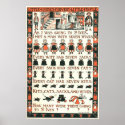
One of my daughters starts high school next year. She tried to select a beginner's sewing class as one of her electives, but, since only four other students registered for the class, it was canceled. You'd think that with the popularity of Project Runway, etc., a full class would be possible; but no. This disturbs me for several reasons.

One, my brother in law cannot sew a button on his shirt. I know this because he was given a shirt as a gift and the pocket seam was undone -- it just needed a few stitches to tack it in place on one side -- but he couldn't do it. I told him, "If you can sew a button on, you can tack that back down." He said he couldn't do that. And that he didn't bother to learn because the dry cleaners always did that for him. Now, I love my brother in law, but I don't want my kids that helpless.

Two, if I want my children to have sewing lessons (and at least the girls want them; they are interested in costume design as well as crafty things), I'll have to pay for them. I'd prefer that the public school I fund with my taxes would provide the education on such basics. And beyond.

Yes, I could teach my kids to sew -- at least what I know, remember and teach myself (see my Stitches In (My) Time post).

But you moms out there know how well that goes with teenage girls... Getting them to sit with me to learn basic sewing and repairs does not go over as well as teaching them "more fun" needlework and craft projects.

Like teaching my kids math etc., it works best when the school provides the core curriculum and I add onto it myself.

As long as we still wear clothes made of fabric, sewing should not be a lost art.

The good news may be that I'll find sewing lessons for all three of us girls... If I can afford that. (Hint hint, if you're in Fargo or know an inexpensive resource here!)

Image credits: Needlework Before Housework by Radical Cross Stitch (E-Pattern from Radical Cross Stitch aka Radical Rags at Etsy).

Sunday, May 2, 2010

Soap Jelly

A wartime tip on the benefits of saving soap scraps in a jar of hot water, aka "soap jelly."


More info on soap jelly here.

Friday, April 30, 2010

Is It Time To Return To Canning At Home?

The 1942 "Victory Recipe Edition" of Modern Homemaker (published by American Homemaker, Inc., which, based on the ads and content, could have been a Kerr Glass publication), is a WWII home front "Food For Victory" call for planting a Victory Garden.


Included is part of an address from then Secretary of Agriculture, Claude R. Wickard, which likely appeals today to farmers and gardeners alike:

It is our job NOW to prepare to meet the demand, not tomorrow or the next day, but right now. There is only one time to plant, and if you are not ready at the right time you have lost a year's production forever. There is no way to make it up.
And Mrs. Alexander H. Kerr, President of the Kerr Glass Manufacturing Corporation, added her own strenuous message:
No great undertaking was ever won by the half-hearted efforts of a few. TO WIN THIS WAR it will take the united efforts of every red-blooded American man, woman and child TO PLANT VICTORY GARDENS... TO CAN THE SURPLUS... TO FEED OUR FAMILIES AT HOME AND OUR BOYS AND ALLIES ABROAD.
I find the urgency of these messages a sad reminder of how disconnected most of us are from the current wars we fight -- and how many of us would find these old messages from World War II more akin to the plight of our current economy, to the threatened and vulnerable way we feel here on the home front. Whichever way these messages on the thrift and necessity of gardening and canning speak to you, I'm sharing the following information with you in the spirit of helpfulness. (As always, click the images for large scans.)

On page 6, information on the "careful study" which should be given to the kinds of fruits and vegetables to be planted. They direct you, whether planting on your own land or in a community garden, to see your County Agricultural Agent (which I suppose today, would be part of or akin to your local university &/or county extension offices) in terms of soil analysis, varieties best suited to your area, etc.


Other interesting notes from this page:
When a family produces its own vegetables it will eat more than if they came from the store and have to be paid for in cold cash. That of course tends to improve the family's health and enables members to work harder and longer. Producing vegetables at home puts the food right where it is to be used; it doesn't take any freight cars or trucks to move the food to those families. Still another advantage of home vegetable gardens is that they release more of the commercial vegetable production for other uses...
On page 7, "Your 3 Step Victory Program" discusses your canning budget, complete with a chart for calculating how much to can for your family based on the "30 non-productive weeks of the year" (which obviously varies by your local as well). For each vegetable, fruit, meat, jams, etc., the number of weekly servings is translated into an amount for one person, which you then multiply by the number of people in your family to ascertain your canning needs.


Now I've never canned food before; most of us have not. Not only the ease of refrigeration, freezing, commercial canning, and commercial freezing, but the low cost, has rendered canning a thing of the past (hence the plethora of cheap glass canning jars at rummage sales, thrift shops, etc.). Aside from the proper supplies for sealing the jars, an increase in water and energy usage, the seeds etc. involved in gardening-- and the time spent in labor -- I'm not sure what else is involved... So I cannot speak for the costs (or ease) of canning. And I'm not even sure if canned food is better than commercially frozen, etc.

But when you figure in the environmental costs (as mentioned above) of buying groceries from the store and the positive benefits of you and your family working together side-by-side, both in the garden and the kitchen, the equation becomes a matter not simply of the amount of money spent today, but of the potential costs of tomorrow.

Trade Your Junk Drawer For Some Easy Organization

Convert a shoe bag into a catch-all for the kitchen -- or any room, really.

Wednesday, April 14, 2010

Spring Cleaning Issues Grandma Probably Never Dreamt Of

Even with advancements in curbside recycling programs, there are plenty of products such as batteries, cell phones, computers, packing peanuts and other items that you can't leave for pick-up -- leaving many to (however illegal or un-green) store them for dumping curbside during a city designated spring clean-up time. While such days mean you avoid the hassles and fees for taking problematic items to the dump, the items still end up in a landfill or worse.

If you want to recycle, check out Earth911.com. Their hotline, 1-800 CLEANUP, has recently been upgraded to simplify the ease of accessing information on recycling locations in your area and offering bilingual help for Spanish speaking folks. They also offer a free iPhone app, iRecycle.

Wednesday, March 17, 2010

Green For St. Patrick's Day & Beyond

EBay's newest ad campaign (as seen in the April 2010 issue of Marie Claire magazine) promotes buying and using vintage as the ultimate "green" purchasing activity" "The greenest product is the one that already exists."

Most thrifty shoppers and vintage living folks know this, but it's great to see eBay promoting it.

Near the end of the magazine, promotion of the Recycle For Rewards program, a rewards and loyalty program that motivates people to recycle and to engage in environmentally virtuous activities with points redeemable for shopping, magazine subscriptions, etc.


The first 100,000 who pledge to recycle their magazines between April 1 and May 15, 2010, will get 15 RecycleBank Points using reward code "RECYCLEYOURMAGS."

And if you sign up for the eBay Green Team, you'll get another 50 points (currently, it's a box to toggle when you register at RecycleBank).

Tuesday, February 23, 2010

Tips For Tenderizing Tough Meat

From a vintage issue of Modern Woman (circa 1945; I didn't put the scan in a proper folder, so I don't remember which issue), a tip for dealing with tough and/or cheap cuts of meat.

Sunday, February 14, 2010

Wall Washing Tips

This tip comes from a 1977 almanac -- the J. Gruber's Hagers-Town, Town and Country, Almanack. Frankly, this tip fascinates me... Logically, it seems starting at the top would make more sense, avoiding streaks on previously cleaned sections of the wall; but I'll be darned if trying it this way wasn't better. (I'd always wondered why I still has those streaks!)

Sunday, January 31, 2010

Caring For Your Boston Fern

This tip about dealing with fern scale infestation comes from a vintage issue of The WorkBasket (likely the 1950's -- for some reason, the scan didn't make it into the right folder for issue number and date; sorry about that.)

How To Keep Cake From Sticking To Plate

Though some of us certainly don't mind picking up the pieces of cake stuck to a plate as a quick kitchen snack, this tip (from Good Ideas: An Interesting Collection Made By Eddy's) does help the serving and appearance of dessert.

Things Your Grandmother Knew © 2008 Por *Templates para Você*